
Is it better than investing in the stock market?
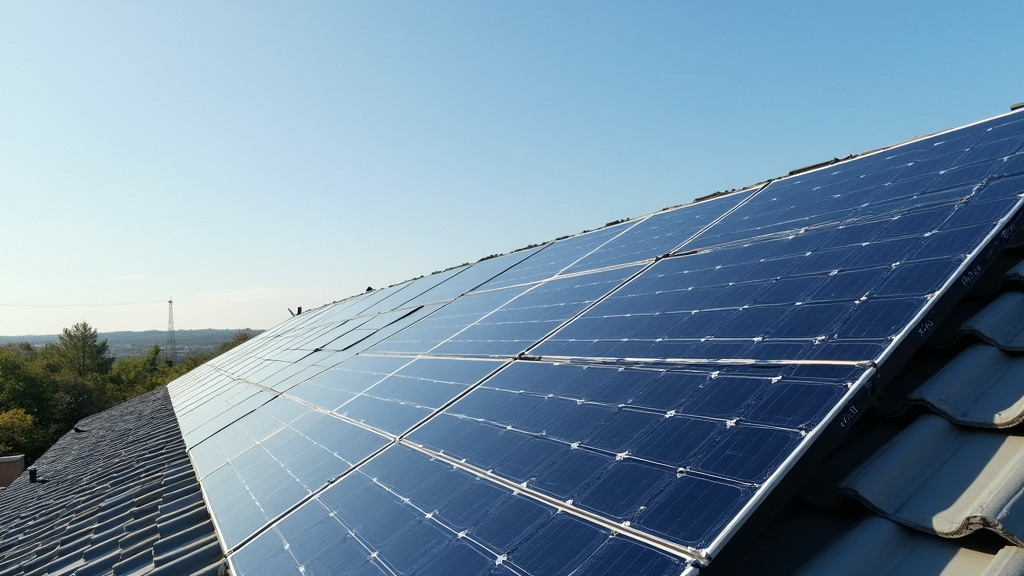
If you’re considering installing solar on your rooftop then you should look into costs and see if it’s really worth it. It might be better to invest the money in the stock market instead. At least if you look at it from a strictly economical viewpoint, you might have other reasons to want to install solar, such as living a greener life and to reduce your carbon footprint. If that’s the case then the exact economical numbers might be less important. It might be a matter of whether you can save money by installing solar not whether it’s the optimized use of your money.
This article compares the two options in practical terms, examines how location changes the math (tropics, the UK, and the US), explains how to think about incentives and storage, and gives a simple framework to choose between a home solar installation and a passive equity allocation. The tone is deliberately spare — the aim is to give you a working decision process rather than to sell an idea.
Two different problems framed as the same question
When you buy stock you purchase a claim on future earnings and cash flows of companies; the expected long run return is a function of profit growth, valuation and dividends. When you install solar on your roof you buy an asset that reduces your future energy bills and — in some places — may generate export income. In finance terms stock ownership is liquid and market-priced every minute, while rooftop solar is illiquid, geographically fixed, and returns in the form of avoided spending rather than direct cash distributions (unless you export power and receive payments).
Each has a typical return profile and a distinct risk set.
- Stocks can be a volatile ride, prices jump around, and if a company tanks, your money might never come back. However, historically, stocks have always provided a good return on investment over time. Learn more about historical returns and the risk of investing by visiting Investing.co.uk. Investing.co.uk is a British website but the majority of the information is relevant regardless of where you live.
- Also comes with their own challenge. You might not produce as much electricity as you expected and panels and inverters can break and expose you to extra cost. There is a lot of uncertainty when it comes to solar as well. If you plan on using government incentives then you have to hope that those won’t change to alter your calculations
Basic financial mechanics — how to compare returns
The simplest way to compare is to convert both choices into expected net present value of future cash flows. For solar you model the installation cost, available incentives, expected annual energy production (kWh), the retail electricity price you avoid, the value of any exports, and operating costs (maintenance, inverter replacement). Discount those net cash flows by an appropriate rate to estimate an implied return or payback period. For stocks you consider expected annualized return (say a long run equity premium over cash), taxes and expected volatility; you can model expected value over the same horizon using Monte Carlo or simple annualized return assumptions. Two practical measures are useful: the payback period for solar (years until cumulative avoided cost equals installation cost) and the expected annualized net return for an equity allocation (after fees and taxes).
Because the expected returns on solar depend heavily on electricity prices and amount of sun, the same system might be a good investment in one location but a bad investment in another.
Where electricity is expensive or rising, the avoided cost argument makes rooftop solar stronger. Where electricity is cheap and stable, the stock market return often dominates purely on expected return per year, especially when you consider the opportunity cost of tying money into a fixed physical asset. The practical upshot: don’t compare abstract percentages alone; compare the actual cash flows you expect to receive or avoid in your specific place.
The tropics: high sunlight, simple arithmetic, other considerations
Physically, the tropics offer some of the best solar resource on Earth. Annual horizontal irradiance in many tropical wet and dry regions commonly exceeds five kWh per square metre per day, which converts to strong per-kWp yields for rooftop systems if panels are correctly oriented and not shaded. This makes it easier for solar to become a profitable investment. Specialist in electricity prices is high in large sections of the tropics.
A higher yield means your solar panels make more electricity each hour, day and year, so your power bills drop more and you get your money back sooner. If you live somewhere blazing hot where electricity is pricey, or if live in area with poor or no electric service than solar’s a no-brainer.
But living in the tropics isn’t all sunshine and rainbows for your panels. Hotter weather makes them less efficient (yep, solar panels hate sweating as much as you do). Monsoon season or months of heavy cloud can drag down your energy output. If you’re near the coast, salty air and humidity speed up rust and can kill your inverter or mounting gear faster than you’d like. And if parts break, local service and spare parts can be a hassle—waiting weeks for a new inverter can mean sitting in the dark, which eats into your savings.
So yes, the tropics usually mean more solar power and quicker payback, but it’s not just about counting sunny days. You’ve got to be real about maintenance, repairs, and the gradual wear and tear.
The UK: lower irradiance, high retail prices, policy quirks
The UK sits at a higher latitude with lower average irradiance than tropical regions, which means a kWp of panels produces fewer kilowatt hours annually, all else equal. That said, the UK’s recent energy price profile and existing export and support arrangements change the economics. With the regulated energy price cap and consumer prices in the mid-tens of pence per kWh (roughly in the high 20p/kWh area in early 2026 under the price cap regime) electricity is expensive relative to historical averages, which increases the avoided cost value of self-generated solar. Combined with system prices that have fallen and the Smart Export Guarantee (SEG) that pays small amounts for exported power, many UK homeowners find payback periods in the mid single digits to low double digits years depending on system size, self-consumption and whether they add storage. Practical UK payback estimates for common residential systems in recent market surveys often fall between roughly six and twelve years; exact numbers depend on installation cost, household consumption profile, and whether you pair the array with a battery to increase self-consumption. The UK’s edge is that retail electricity is comparatively costly, and that raises the baseline value of any energy you generate and use yourself. But the downside is lower per-kWp output and policy sensitivity — export tariffs and any changes to support schemes materially affect returns.
The United States: wide variation, strong incentives in many cases
The US is heterogeneous. Nationally the typical residential electricity price sits in mid-teens cents per kWh, but this hides wide state-level variation; some states pay much more (Hawaii at the high end) while others pay much less. Because of that dispersion the attractiveness of rooftop solar depends heavily on state-level prices and incentives. A major driver of US household solar economics in recent years has been the federal Investment Tax Credit (ITC), widely set at 30 percent for qualifying residential installations through recent legislative windows, which materially reduces upfront costs for homeowners who can use the credit. Local rebates, net metering policies and state tax credits further change the numbers. On the modeling side, a system that costs, say, $25,000 pre-incentive might drop substantially after the ITC and local grants, shifting payback materially. In states where retail rates are high and net metering is generous, payback can be under a decade and lifetime savings substantial. In states with low retail rates or punitive export rules, payback extends and the stock market alternative may be more attractive purely on expected financial return. The US also has pronounced seasonal differences in insolation by latitude and climate which affects annual yield per kWp.
Expected returns: rough ranges and how to interpret them
Rather than a single number it helps to think in ranges. For rooftop solar in favourable markets (strong sun, high retail electricity prices, generous incentives) net real returns after costs often imply payback windows of five to ten years and lifetime internal rates of return that can exceed many conservative fixed income alternatives; in marginal markets the payback can be 12–20 years which compresses the economic attractiveness relative to a broadly diversified stock portfolio. For equities, many investors use a long run real return assumption in the ballpark of 5–7 percent annualized before taxes and fees for a broadly diversified index; stocks come with multi-year drawdowns and no guaranteed floor, but they remain liquid and portable. Comparing directly, rooftop solar commonly gives a better risk-adjusted outcome where electricity is expensive, incentives are strong, and the household consumes most of the generated power. Where retail electricity is cheap and incentives limited, the stock market’s expected annualized return and liquidity often dominate. The choice therefore depends on both location and personal tolerance for illiquidity and concentrated, non-tradable assets.
Batteries, self-consumption and the value of timing
A crucial factor that changes the algebra is the fraction of solar output you actually consume at the moment it’s produced. Panels produce at midday; households often use power in the evening. If you can increase self-consumption with a battery the economic value of each kWh rises because you avoid retail prices at times when otherwise you’d buy from the grid; this shortens payback. Batteries themselves add cost and have shorter lifespans than panels, so the combined system analysis must account for cycle life, replacement cost and degradation. In many cases the cheapest path to better economics is to shift more consumption to daylight hours (electric water heating, EV charging, timers for dishwashers) as a complement to solar rather than relying solely on batteries. The marginal value of a kWh stored and reused is a driver of the whole decision and tilts the scale toward rooftop solar where time-of-use tariffs or high evening prices make shifting consumption economically valuable.
Risk factors and hidden costs to include in your model
Don’t ignore small but real items: inverter replacement roughly every 10–15 years, modest cleaning or mounting corrosion in coastal areas, insurance or added home warranty costs in some policies, and the fact that roof work may coincide with re-roofing if your tiles are old. Policy risk matters: a change in export compensation, a retroactive tax, or new local planning restrictions can alter long term returns. On the investing side stocks have known structural benefits: diversification, low friction to rebalance, and the ability to access cash quickly. The practical modeling step is to run both scenarios (solar cash flow and stock expected return) under a few different assumptions — optimistic, base case, and conservative — then compare outcomes using the metrics that matter to you (payback, NPV after tax, volatility and liquidity).
How to decide in practice — a short decision framework
First, for information about how much it would cost to install solar, do not only reach out to local providers but also look at how much it would cost if you import the equipment yourself. It is often radically cheaper to import solar panels yourself than it is to buy them locally. And then also look at the availability of second-hand panels. Solar panels usually have a long lifespan and it’s okay to buy secondhand but be more wary about buying secondhand batteries since they fail more commonly.
Also make a detailed report on how much you pay for electricity and how much you would pay if your consumption goes up or down. Some areas have progressive electric bills and you might have to pay a lot more as your consumption increases.This might make solar economical for big users in an area where it’s less economical for smaller users.
Second, model the system cash flows conservatively: assume modest panel degradation, schedule an inverter replacement, and use conservative inflation for electricity prices. Third, compute a payback period and an implicit annualized return for the solar option. Fourth, compare that implied return to a conservative expectation for equities after tax and fees for the same holding period, adjusting for differences in liquidity and risk tolerance. If the implied solar return materially exceeds your alternative adjusted for risk and you plan to live in the home for the relevant horizon, solar often makes sense; if not, capital in a diversified stock allocation preserves liquidity and optionality. Finally, remember the non-financial benefits: lower carbon footprint, reduced exposure to future electricity price shocks, and the potential to increase property value in some markets — these matter to some owners even if they don’t show up cleanly in the IRR.
Practical example sketches (illustrative, not quotes you should treat as exact)
Imagine a 4 kWp system in a sunny tropical city that produces 5,000–6,000 kWh a year, paired with high retail electricity that costs the equivalent of $0.20–$0.30 per kWh. If installation net of incentives runs $6,000–$8,000 the payback is often under ten years and lifetime savings can be large. Contrast that with a UK 4 kWp system producing perhaps 3,200–3,800 kWh per year; with retail electricity around 27 pence per kWh and a system cost in the mid-thousands of pounds the payback commonly ranges from around six to twelve years in many modern estimates — still attractive for households that use much of the generation during the day but less compelling if you export most of the power at low rates. In the US, where state prices and incentives vary, the difference between Hawaii or California and a low-cost state can be the difference between a ten year payback and a much longer one; federal tax credits through recent policy windows have been a significant benefit for many homeowners while they were available, and the end of such credits materially changes the calculus. These are directional examples; run the numbers for your address before deciding.
Other practicalities: resale value, planning and grid access
Solar can increase the marketability of a home in some neighbourhoods, but that premium varies by region and by buyer preference. If you plan to sell before the system pays back you may not realise full value; buyers discount repairs and may demand evidence of maintenance. Some lenders treat leased solar differently from owned systems, so ownership structure matters. Connection to a weak local grid can complicate export and limit the benefit of generation if the network restricts exports or levies charges, which occasionally happens in places experiencing rapid deployment of distributed PV. Check with local authorities and your distribution network operator on any connection constraints, potential export curtailment and application fees before committing.