The Importance of Home Orientation
Proper home orientation plays a critical role in enhancing energy efficiency. When a home’s position on a site is optimally aligned with natural elements, it can significantly reduce energy consumption. This not only lowers utility bills but also decreases the home’s carbon footprint, contributing to environmental sustainability.
Solar Gain and Natural Light
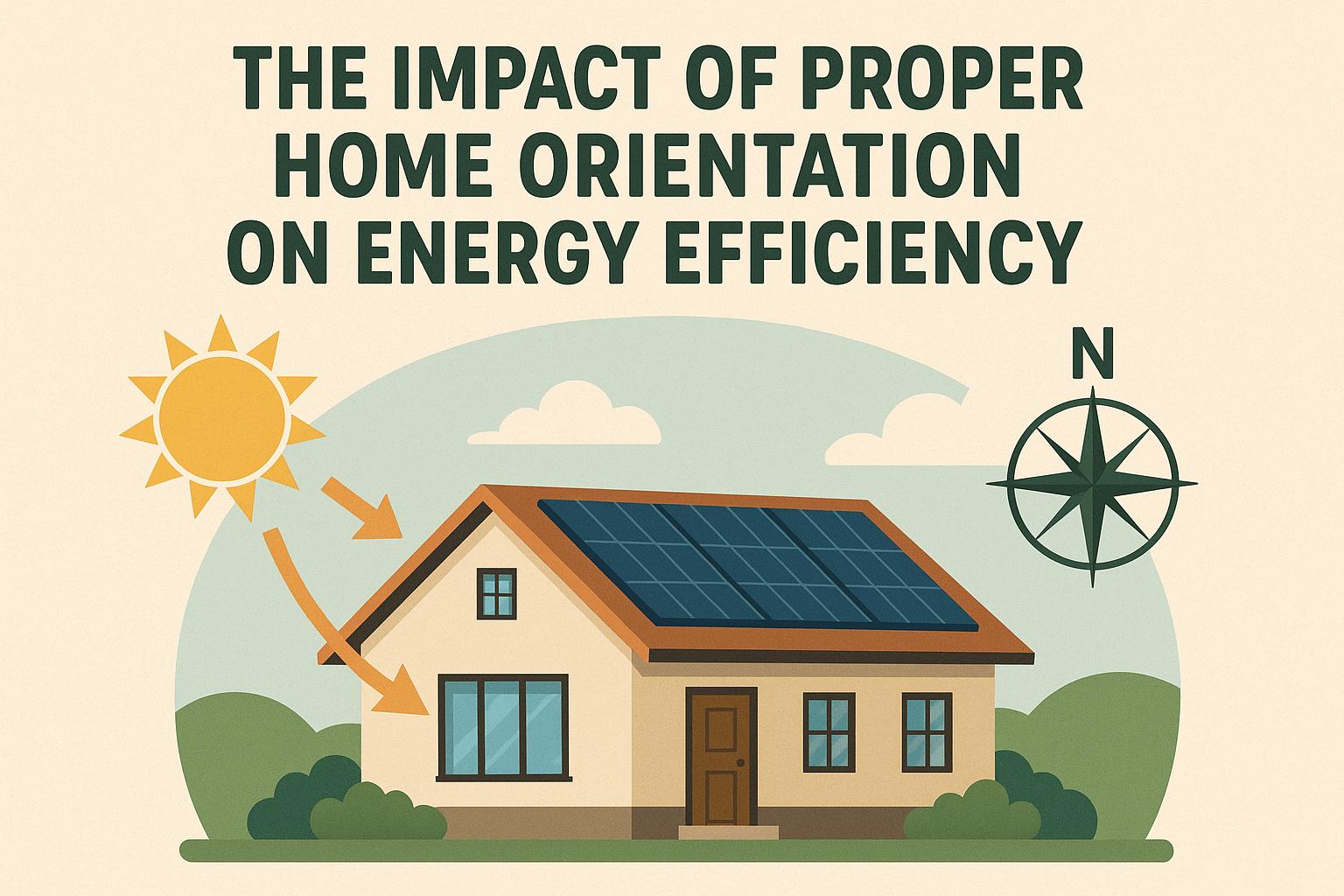
Aligning a house to maximize solar gain during winter and minimize it during summer can lead to substantial savings. Homes in the northern hemisphere benefit most from being oriented to face south. This allows occupants to take advantage of the sun’s warming rays in winter while also employing strategies like overhangs or deciduous trees that block solar heat in summer.
Passive Solar Design
Implementing a passive solar design in the home’s orientation helps in optimizing solar gain. The concept involves using the sun’s energy for heating and lighting without mechanical systems. Properly placed windows, thermal mass to absorb sunlight, and strategic shading are some elements of passive solar design that can efficiently regulate a home’s temperature. This passive approach not only reduces dependency on artificial heating but also leverages natural elements to maintain comfort. By focusing on building orientation and the intelligent use of construction materials, homeowners can significantly reduce their heating and cooling costs.
Wind and Ventilation
Wind pattern considerations are equally important. Orientating a home to take advantage of prevailing winds can improve natural ventilation. A well-ventilated home reduces reliance on air conditioning systems and improves indoor air quality. Positioning windows and openings in a manner that facilitates cross-ventilation can greatly enhance comfort levels inside. It’s not solely about energy savings; improved indoor air flow can enhance overall living conditions, fostering healthier environments. Exposure to fresh air helps eliminate indoor air pollutants, providing a continuous supply of fresh air which is crucial for maintaining health and well-being.
Landscape Considerations
Landscaping can work hand-in-hand with home orientation. Trees, shrubbery, and other plants can provide windbreaks against cold winds or cooling effects during hot seasons. Moreover, utilizing local plants can further enhance energy efficiency by reducing dependency on water for maintenance. Strategic planting not only contributes to energy savings but also adds aesthetic value and ecological benefits.
Considering the type and placement of vegetation can serve multiple purposes. For instance, deciduous trees can be strategically placed to provide shade during summer months while allowing sunlight to warm the home when they shed their leaves in winter, creating a natural balance and minimizing energy usage throughout the year. Shrubs and bushes can be used to direct wind flow or offer additional insulation by acting as barriers against wind.
The Impact of Regional Factors
Regional climate conditions greatly influence the optimal orientation of a home. In colder regions, maximizing solar gain becomes crucial to maintaining warmth, while in hotter climates, minimizing heat gain to stay cool is often the priority. Each region offers its unique set of climatic conditions that must be taken into account when planning a home’s orientation. Elements such as humidity, prevailing wind directions, and seasonal temperature variations all play a significant role in dictating the design choices for sustainable home construction.
Technological Aids in Home Orientation
The advent of technology has introduced new avenues to optimize home orientation. Advanced software tools can simulate sun paths, shadow lengths, and wind flow patterns to the finest detail and precision. These tools allow the creation of models that predict the energy performance of various design choices before breaking ground. By assessing these simulations, homeowners and architects can make informed decisions aligned with energy efficiency and sustainability goals.
Conclusion
In conclusion, the orientation of a home is a fundamental aspect of its energy efficiency. Through careful planning and consideration of sun paths, wind patterns, and landscape, homeowners can achieve substantial energy savings. For those interested in delving deeper into optimizing home orientation for energy efficiency, resources like articles from Energy Saver provide valuable insights.
The integration of knowledge about solar gain, wind patterns, and regional specifics with technological tools makes home orientation a strategic endeavor. Understanding and implementing proper home orientation is a strategic move that benefits both individuals and the environment, making it an essential consideration in sustainable home design and construction. By prioritizing home orientation, the vision of a low-carbon, sustainable housing future becomes realistically achievable.