Understanding the Importance of Energy Efficiency in Basements and Crawl Spaces
Improving energy efficiency in basements and crawl spaces is crucial for reducing overall home energy consumption. These areas, often overlooked, can significantly impact heating and cooling costs. Enhancing their insulation and sealing can lead to substantial energy savings.
Identifying Common Issues
Basements and crawl spaces are prone to several energy-wasting issues due to their location and function. Key problems include:
Inadequate Insulation: A lack of proper insulation leads to heat loss in winter and heat gain in summer. Without adequate insulation, the temperature regulation within your home can be severely affected, making it harder to maintain a comfortable environment and leading to increased energy consumption as you attempt to compensate for these temperature fluctuations.
Air Leaks: Cracks and gaps in walls, floors, and around pipes allow conditioned air to escape. Air leaks are often invisible yet contribute significantly to energy inefficiency. These leaks facilitate an exchange of indoor and outdoor air, which means that your heating and cooling systems need to work harder to maintain the desired indoor climate, thus increasing energy expenditure.
Moisture: Excess moisture can damage insulation and increase HVAC demands. Moisture can seep into insulation materials, reducing their effectiveness. Over time, this can lead to not only energy inefficiency but also structural harm to your home and potential health hazards like mold growth.
Improving Insulation
Enhancing insulation is a fundamental step in reducing energy loss. Focus on the following areas:
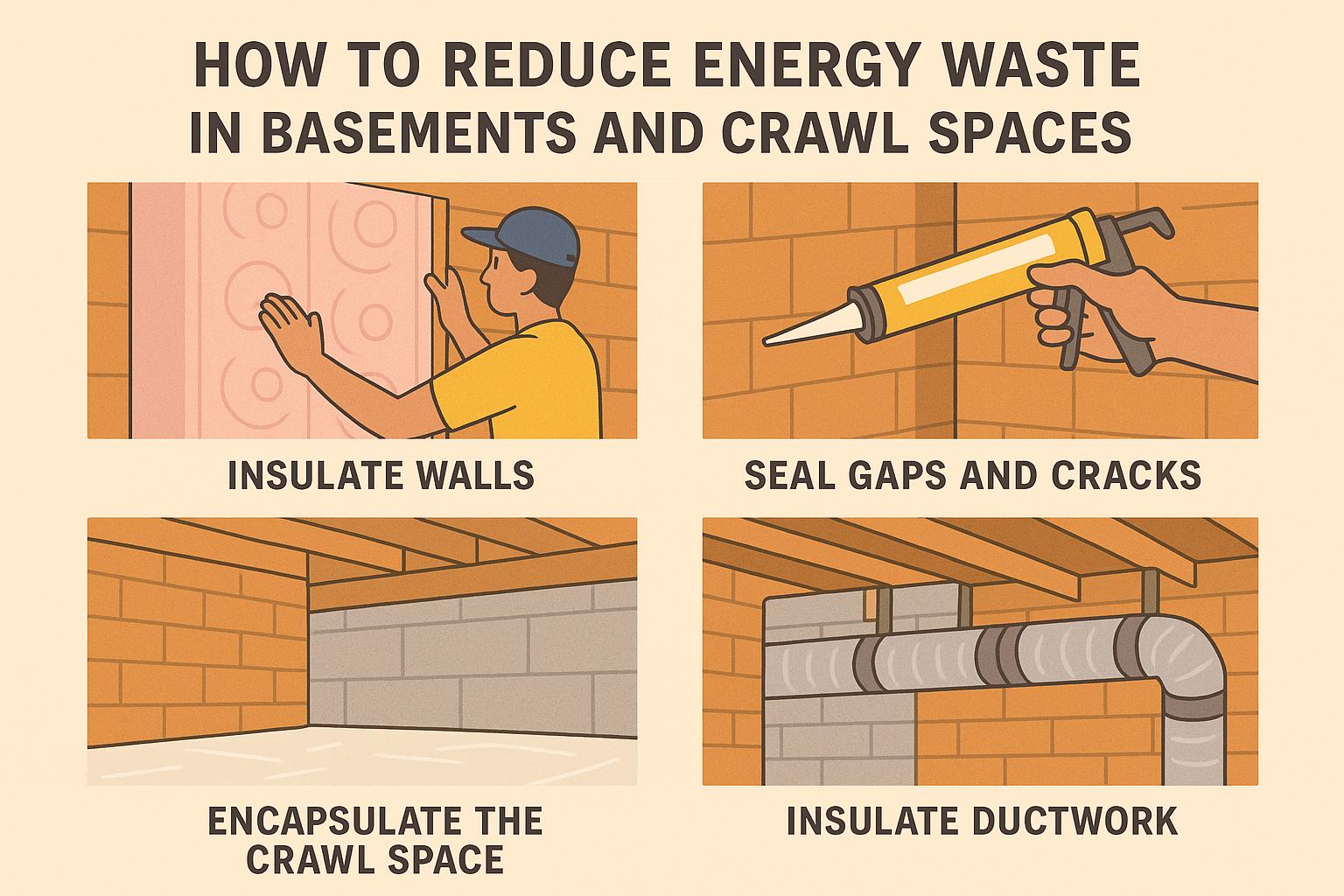
Walls and Floors: Use spray foam or rigid foam panels to insulate walls and floors effectively. This not only increases energy efficiency but also provides added moisture control. Insulating these areas effectively helps in maintaining a consistent temperature, mitigating the undesirable effects of temperature swings that occur due to inadequate insulation.
Ductwork: Ensure all HVAC ductwork is properly insulated, especially in unconditioned spaces, to prevent energy loss. Insulating ductwork minimizes the risk of losing heated or cooled air as it travels through your home, ensuring that your HVAC system operates more efficiently.
Sealing Air Leaks
An essential step in improving energy efficiency involves sealing all potential air leaks to prevent conditioned air from escaping. Utilize caulk and weatherstripping to fill gaps and cracks around:
- Windows and doors: These are common places for air leaks to occur. Properly sealing these areas can significantly reduce energy loss.
- Pipes and wires penetrating walls: Examine where utility lines enter your home and seal any openings.
- Vents and duct connections: Inspect different vent and duct connections to ensure they are tightly sealed.
For more detailed instructions on sealing air leaks, refer to resources like the U.S. Department of Energy.
Managing Moisture
Moisture control is critical to maintaining effective insulation and preventing energy waste. Consider the following strategies:
Install a Vapor Barrier: Place a polyethylene plastic cover over the ground in crawl spaces to reduce moisture entry. This protective layer acts as a shield, reducing the risk of dampness that can compromise your insulation’s integrity.
Maintain Proper Drainage: Ensure that gutters and downspouts direct water away from the foundation. Efficient water drainage is essential to prevent water accumulation around your home’s foundation, which can seep into basements and crawl spaces, leading to moisture-related issues.
Conclusion
Investing in the energy efficiency of your basement and crawl spaces can lead to considerable energy savings and enhanced comfort in your home. By addressing insulation, sealing air leaks, and managing moisture, you can effectively reduce energy waste. Additionally, with improved energy efficiency, you also contribute to a more environmentally sustainable home by lowering your carbon footprint.
For a comprehensive approach, it is advisable to consult a professional energy auditor, who can provide tailored advice and solutions. A professional can assess your current setup, identify areas for improvement, and recommend the most effective strategies to enhance your home’s energy efficiency. This not only ensures that you apply the best practices but also maximizes your return on investment in energy efficiency upgrades.
Altogether, taking proactive steps to improve the energy efficiency of your basement and crawl spaces not only leads to a reduction in energy bills but also fosters a more comfortable and sustainable living environment. These efforts yield long-term benefits for both your household and the environment, emphasizing the significance of considering these often-neglected parts of your home in your energy efficiency strategy.