Introduction to Energy-Efficient Ceiling Fans
Ceiling fans have been a staple in both residential and commercial settings for decades due to their ability to circulate air and create a cooling effect. Historically, their primary purpose was to provide relief in warm weather. However, with advances in technology and a growing emphasis on sustainability, the modern role of ceiling fans has evolved. Today, energy-efficient ceiling fans are considered crucial for both cooling and heating applications, serving as a sustainable alternative to traditional HVAC systems.
How Energy-Efficient Ceiling Fans Work
At the core of an energy-efficient ceiling fan’s operation is its design, which emphasizes minimal energy consumption while maintaining high performance. These fans often incorporate advanced motor technologies, most notably DC (Direct Current) motors. Unlike traditional AC (Alternating Current) motors found in older fan models, DC motors are known for their low power consumption and quiet operation. Furthermore, the blades of these fans are designed aerodynamically to maximize airflow efficiency. This combination of a DC motor and ideally shaped blades ensures that these devices offer optimal performance without unnecessary energy waste.
Cooling in the Warmer Months
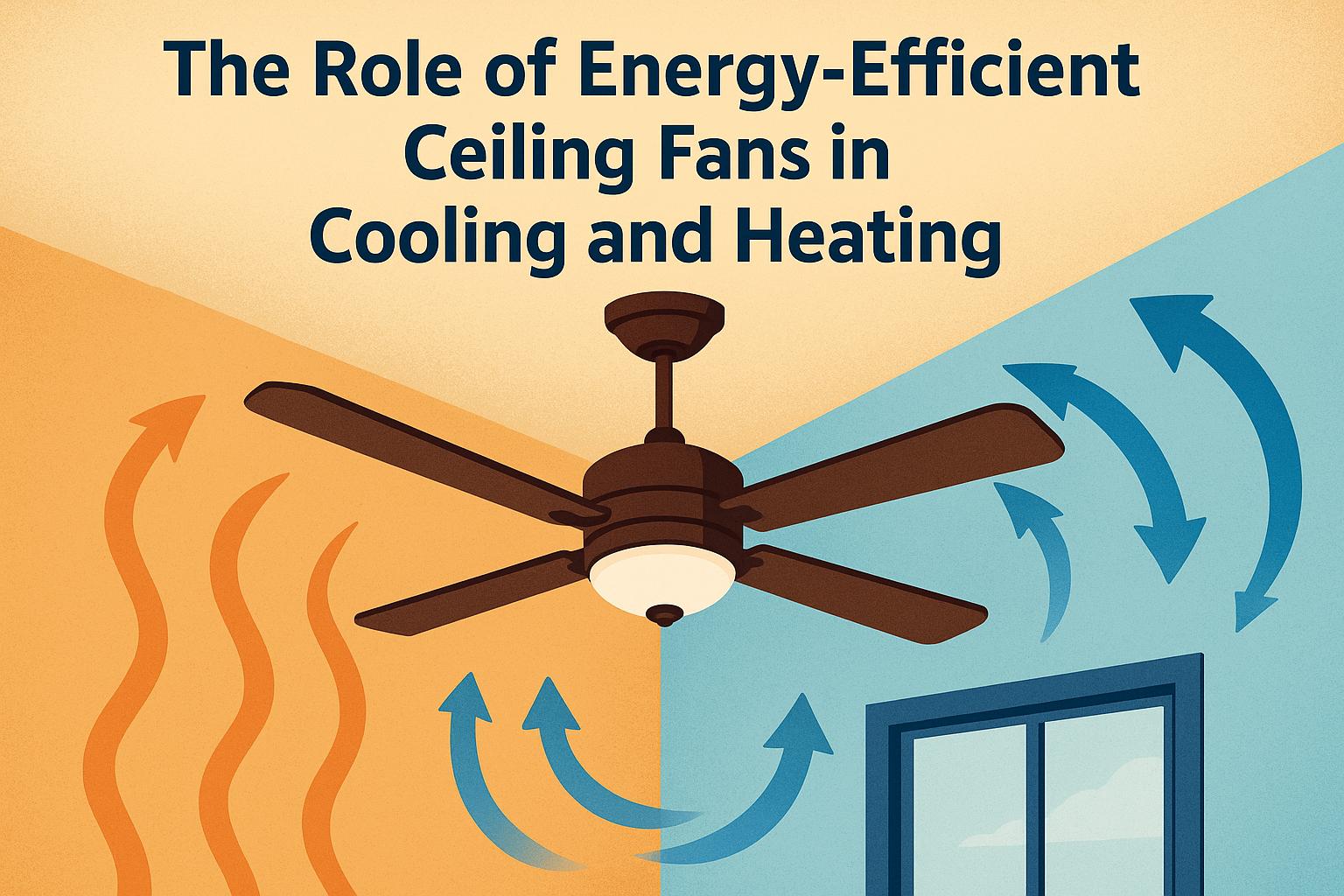
During the summer, energy-efficient ceiling fans provide a refreshing breeze that enhances air movement within a room. While they do not technically lower the ambient air temperature, the breeze they generate can make a space feel significantly cooler—up to 8 degrees. This sensation allows occupants to feel comfortable even when thermostats are set at higher temperatures, thus reducing the dependence on energy-intensive air conditioning systems. According to the U.S. Department of Energy, this strategy of pairing fans with adjusted thermostat settings can lead to substantial reductions in cooling costs.
The Role in Winter Heating
The function of ceiling fans extends beyond the summer months. They can also play a valuable role in winter heating. Most modern energy-efficient fans come equipped with a reverse function that enables the blades to spin in the opposite direction. This reverse motion aids in the process of *destratification*, where warm air that naturally rises to the ceiling is pushed downward. This even distribution of heat can keep spaces warmer and more comfortable, especially in rooms with high ceilings. By keeping the warmth appropriately circulated, this feature of energy-efficient fans can decrease the need for additional heating devices, offering a dual-season utility.
Energy Efficiency Standards and Certifications
When selecting an energy-efficient ceiling fan, it is important to prioritize models that meet established efficiency standards. One such hallmark is the ENERGY STAR® certification. Ceiling fans with this certification are required to consume about 60% less energy than standard models, which translates to both financial savings on electric bills and a reduced environmental impact. Furthermore, the emergence of smart technology has enhanced the capabilities of these fans. Equipped with features for remote operation and scheduling through mobile devices, smart ceiling fans offer users improved convenience and control, ensuring that energy is used efficiently at all times.
Environmental and Financial Benefits
Embracing energy-efficient ceiling fans offers numerous environmental and financial advantages. By minimizing electricity usage, these fans contribute to a reduction in demand for energy-intensive HVAC systems. This decrease not only reduces greenhouse gas emissions associated with electricity production but also diminishes the carbon footprints of the spaces they are employed in. Economically, while the initial expense of purchasing a high-efficiency fan may be higher, the resulting long-term savings in energy costs can quickly offset this upfront investment.
In sum, energy-efficient ceiling fans offer functionalities that far exceed the traditional scope of air circulation. By recognizing how these devices operate and understanding the benefits they provide, consumers are empowered to make choices that improve their indoor environments while supporting sustainability initiatives. Whether utilized for cooling in the summer or heating in the winter, these fans are integral components of a modern, energy-conscious strategy for managing building climates efficiently.